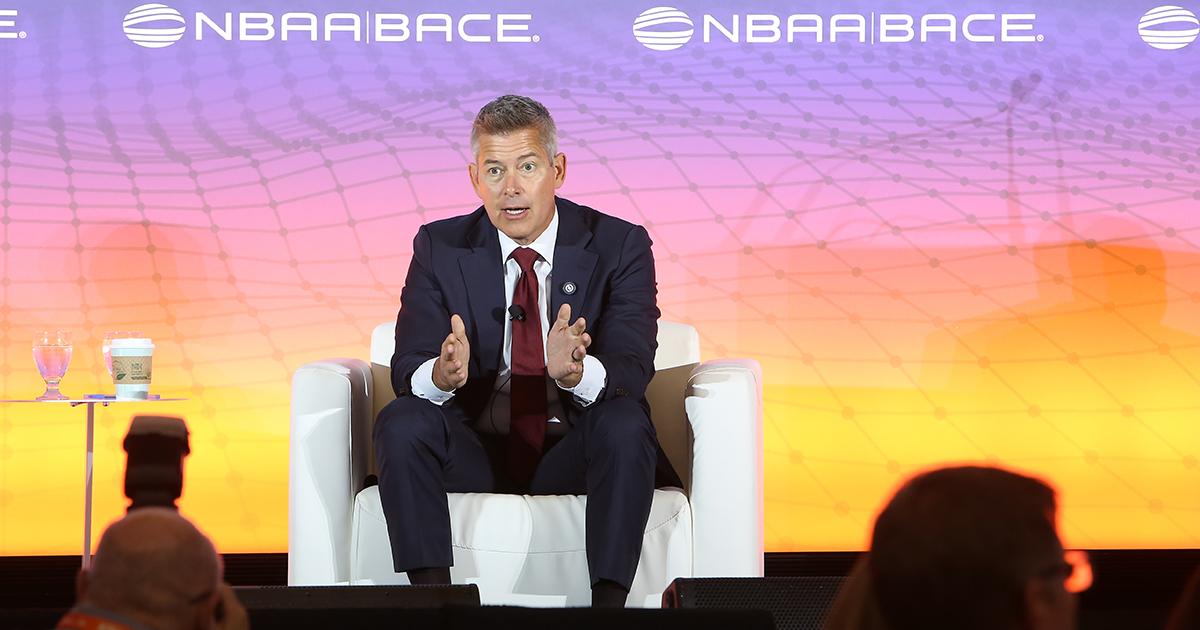
Stressing that longer doesn’t mean safer, Transportation Secretary Sean Duffy acknowledged that the FAA needs to do a better job of improving the certification process to avoid the lengthy delays that prolong projects. Speaking during a Newsmakers luncheon on Wednesday at NBAA-BACE, Duffy expressed his enthusiasm about the new wave of advanced air mobility (AAM). But he was concerned that certification can impede progress without advancing safety.
“We’re trying to do a better job,” Duffy said. “The core goal we do is safety 100%. But I don’t think more time means more safe. Those two things don’t always go together.”
He asked whether the FAA could have systems in place that enhance safety, but in a far more expedient way. This needs to be done collaboratively with industry, he said.
The DOT and the FAA are trying to move ahead more efficiently, yet safely, through streamlined processes with air traffic control modernization, Duffy pointed out. “We sent a team in and said, ‘What are the problems? What are the solutions? How do we actually implement those solutions?’”
He said the FAA needs to do the same with certification. “We have to do a deep dive in certification…on how we can truly improve the process.” It will start with the government, “but we have to pull all our partners in to get their feedback on how we can improve the process. We have a lot of this we’re eager to talk about. The best ideas oftentimes come from all of you, and we’re an open book. We’re regulators, but we’re partners.”
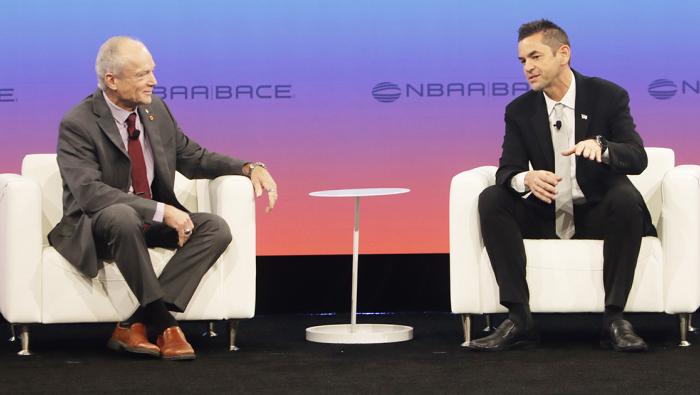
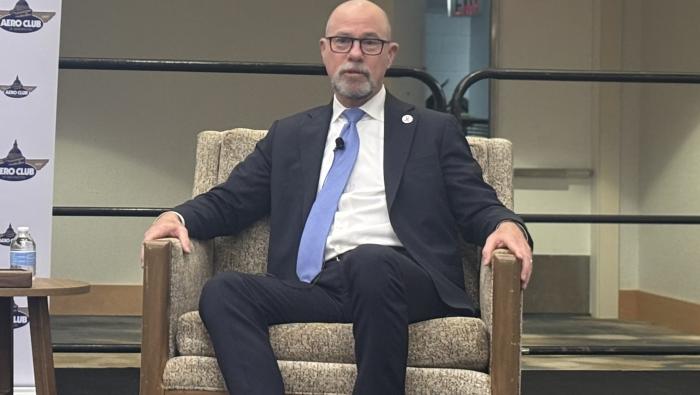
Speaking during a fireside chat at the luncheon, Duffy was joined by Kristie Greco Johnson, NBAA’s senior v-p of government affairs for NBAA, and Beta Technologies president and CEO Kyle Clark. On Wednesday morning, Beta became the first to receive FAA authorization to conduct flight operations with prospective customers in eVTOLs.
Duffy asked Clark how the process had been for Beta. Clark responded that Beta was not asking for a low bar. “We’ve just asked for a consistent bar. Don’t move it while we’re jumping.”
However, he added that the process is improving “because of clarity, consistency, and leadership intent.” Clark acknowledged that Beta is trying to do things that are hard. “We’re trying to certify electric propulsion that’s never been certified by the FAA, Part 23 airplanes that introduce much safer fly-by-wire systems, and batteries, which are a little bit spooky to some people.”
This requires a close partnership, he said. The industry was a little nervous about the FAA downsizing, but instead the FAA is becoming more efficient. “It’s not perfect yet, and there’s a lot of things we have to do to advance that, but it’s been better more recently.”
Clark also agreed with Duffy on certification timeliness. “It’s not only that more time doesn’t necessarily mean more safety. In many cases it’s just the opposite,” he said, pointing to safety-enhancing technologies that can prevent runway incursions and provide collision avoidance. Delays can be detrimental to public safety, he said.
Duffy also urged the audience to consider working with the DOT or the FAA. “We have a lot of needs, and we need really smart people,” he said.
He pointed to complaints about the government needing to operate better: “We want the FAA to operate more efficiently and smarter.” Duffy called the FAA “an amazing organization…This is the time where we need the smart people to come in and say, ‘I’m going to give back to my government—I’m going to pitch in.’”
Duffy urged people to offer 18 months or two years of their time. “What we’re doing now is going to change aviation for decades to come, and this is one of the coolest times that we can be part of.”
More In Regulations and Government