Green Infrastructure Critical to Hydrogen Propulsion’s Success
Hydrogen’s success as a zero-CO2 emissions aviation fuel depends largely on its production and distribution using renewable energy at huge scale.

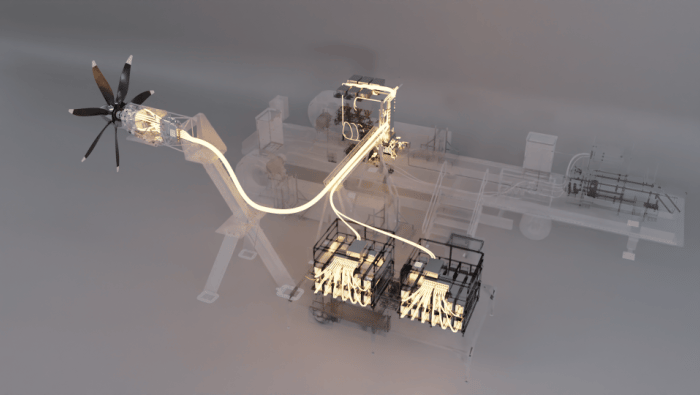
Aerospace manufacturers agree that the ability to produce hydrogen in vast quantities using only renewable forms of energy such as solar and wind power will prove the most critical factor in the aviation industry’s effort to develop the element as a viable, non-CO2-emitting fuel. In interviews with AIN, at least five major OEMs stressed the need for massive investment to develop the complex infrastructure required to produce hydrogen on an environmentally sustainable basis, and to distribute, store and disburse it as a fuel safely, all of which must happen alongside an effort to develop hydrogen propulsion systems for large and small aircraft.
More In Engines