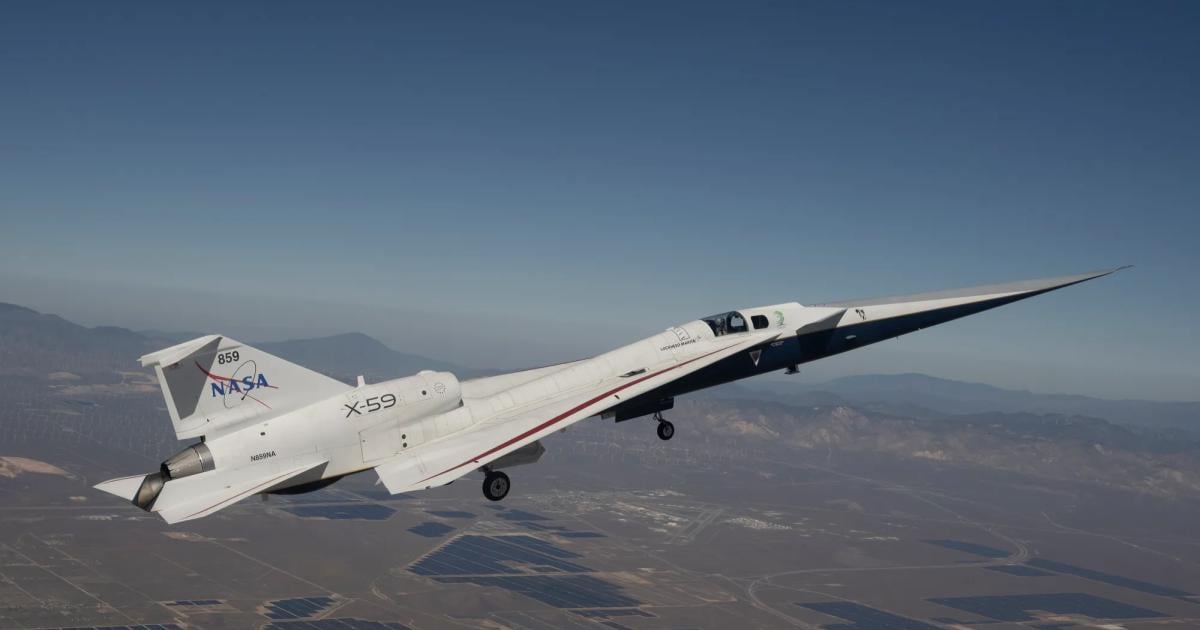
NASA’s X-59 supersonic demonstrator returned to the skies on Friday morning for a nine-minute flight that was cut short after a warning light illuminated. However, NASA officials said they were still able to gather data during the second flight from the aircraft built in collaboration with Lockheed Martin at its Skunk Works facility in Palmdale, California.
The aircraft first flew on October 28, reaching 12,000 feet and 200 knots. Plans for the second mission called for an hour-long flight that would expand the envelope to 20,000 feet and 225 knots. This would be followed by a series of successive flights to further expand the flight profile as it prepared to participate in the NASA Quesst program to examine the effect of quieter supersonic technologies on a variety of communities. This data would be used internationally to contemplate whether supersonic flight over land could once again become possible.
In this article
More In Aircraft